Originally published by Euronews
The developments come as the Trump administration sees a marked rise in the influence of anti-vaccine figures and movements, especially after the Covid-19 pandemic, which fuelled a wave of conspiracy theories and misleading health information.
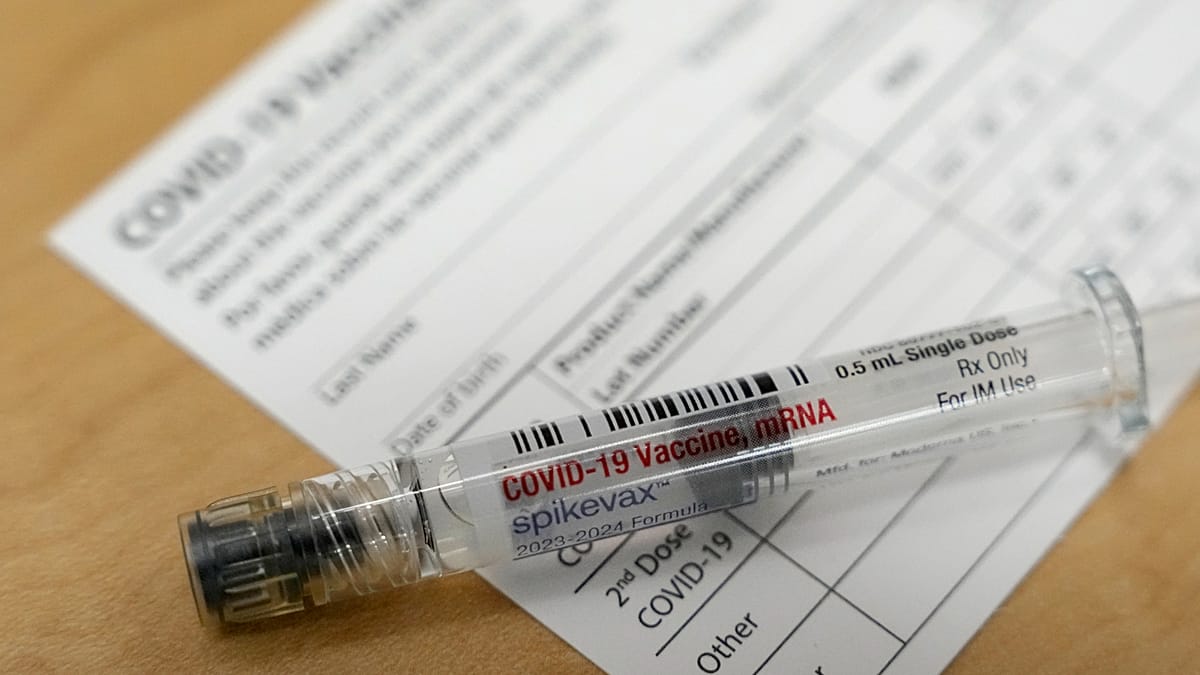
The New York Times, citing an official at the US Department of Health and Human Services, revealed that the US Food and Drug Administration (FDA) has in recent months halted the publication of scientific studies that confirm the safety of a number of vaccines.
The move has triggered a new wave of controversy over the policies of President Donald Trump’s administration on vaccinations and public health at large.
According to the report, two of the studies that were pulled were among the most prominent and heavily-funded recent government research projects, costing millions of taxpayer dollars.
The two studies involved ministry-affiliated scientistific analysis of a vast database containing millions of patients’ medical records in order to assess the safety of Covid-19 vaccines.
They concluded that serious side effects associated with the widely used vaccines are extremely rare.
The NYT added that scientists were ordered in October to withdraw the two studies, even though medical journals had already agreed to publish them, raising widespread questions in scientific and medical circles about the nature of political interventions in the course of medical research.
In an official comment on the issue, the Health and Human Services Department spokesperson Andrew Nixon said in an email quoted by the paper that the studies “were withdrawn because their authors reached general conclusions that are not supported by the underlying data”.
Nixon stressed that the FDA “acted to protect the integrity of the scientific process and to ensure that work associated with it adheres to its high standards”.
Growing anti-vaccine rhetoric
These developments come at a time when the Trump administration is witnessing a marked increase in the influence of figures sceptical of vaccines, particularly after the Covid-19 pandemic, which saw the widespread dissemination of conspiracy theories and misleading health information.
During his 2024 election campaign, Trump pledged to give prominent anti-vaxxer Robert F. Kennedy Jr a prominent role in the White House healthcare portfolio, before later announcing his nomination as Secretary of the Department of Health and Human Services following his win.
Kennedy’s nomination sparked a broad wave of objections, with more than 75 Nobel laureates, along with around 17,000 doctors, publicly rejecting his appointment because of his controversial positions on vaccines and his embrace of health-related conspiracy theories.
Kennedy is known for promoting claims that have been scientifically debunked, including the allegation that vaccines cause autism and the notion of “chemtrails”, a conspiracy theory which claims that the white trails aircraft leave in the sky are chemicals deliberately sprayed to harm people, as well as other unproven claims, among them linking circumcision to autism.
Despite this, the US Senate narrowly approved his appointment, in a vote that was largely split along party lines.
Sweeping changes to US vaccine policy
Since taking office, Kennedy has introduced a series of changes that have drawn fierce criticism within the US medical community.
In February 2025 he forced the Centers for Disease Control and Prevention (CDC) to halt its campaigns promoting flu vaccines, while an advisory committee composed mostly of figures he had appointed voted to end the body’s official recommendation that newborns receive the hepatitis B vaccine.
In what has been described as an unprecedented move, Kennedy dismissed all members of the CDC’s Advisory Committee on Immunisation Practices, the body responsible for issuing scientific recommendations on vaccines in the United States.
The dismissals triggered sharp criticism from leading public health figures. Dr. Georges Benjamin, Executive Director of the American Public Health Association, described the step as a coup against health institutions.
“This is not how democracies work, and it is not good for the health of the nation,” Benjamin told the AP, referencing growing concerns about the politicisation of health and scientific decision-making in the United States.
Could nicotine be good for you? Expert debunks influencer claims
Are cruise ships a hotspot for virus outbreaks?
Live position of the hantavirus ship en route to the Canary Islands
As an Amazon Associate, we earn from qualifying purchases at no extra cost to you.